
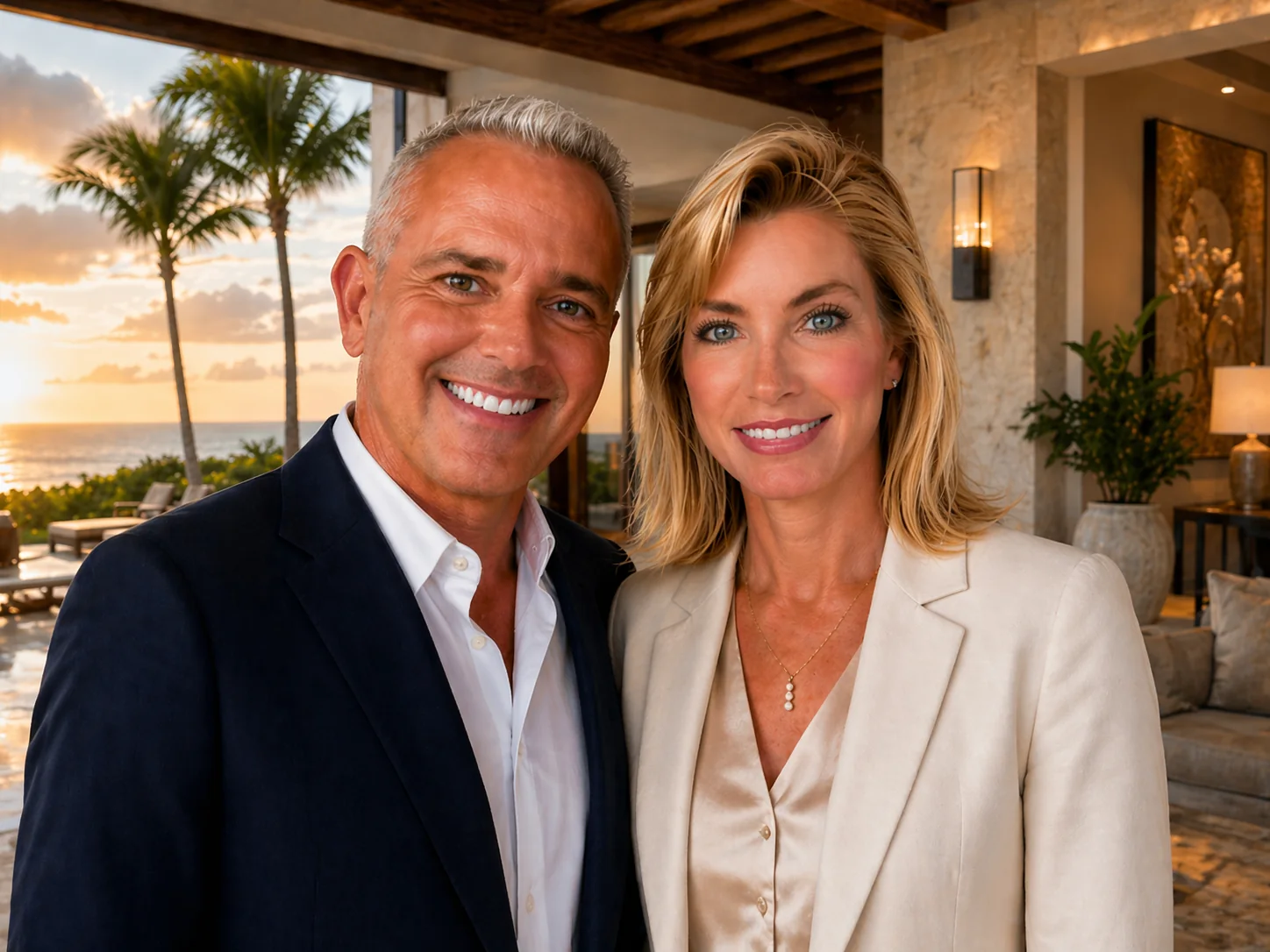
Dorado is a real town on Puerto Rico's north coast, roughly 30 to 45 minutes west of San Juan's Luis Muñoz Marín International Airport (SJU). Its name means "golden." Folded into the town is Dorado Beach, a Ritz-Carlton Reserve — a fifty-acre former Rockefeller estate — surrounded by the town's plaza, church, and generations-old local life.
Dorado Beach questions, answered.
Resident-written answers about moving to, buying in and living at Dorado Beach—organized for real people, traditional search and AI answer engines.
Ask the question you actually have.
Search all 111 answers, choose a topic, or browse the full library. Core answers are in crawlable HTML; filters and accordions simply make the page easier to use.
Official rules are linked to primary documents. Changing numbers are dated. Resident observations are identified as experience—not law, tax advice or a promise about a specific property.
Read the sourcing methodologyPuerto Rico has many faces: San Juan is cosmopolitan, Rincón is surf culture, Condado is urban beachfront glamour, and Palmas del Mar is a sprawling east-coast resort community. Dorado is something rarer — genuinely world-class residential infrastructure layered directly over real Puerto Rican town life. You can take a meeting from a Reserve residence in the morning and buy bacalaítos from a roadside stand in the afternoon. It refuses to make you choose between privacy and authenticity.
It's fifty acres of the former Laurance Rockefeller estate on Dorado's coast — one of only a handful of Ritz-Carlton Reserve properties on earth, the brand's most exclusive tier. Rockefeller developed the original resort in the 1950s on a single principle: that luxury and the natural world should serve each other rather than compete. The modern Reserve was resurrected and reimagined after Hurricane María by the Stubbe family and their family-owned Puerto Rican development company, PRISA Group. Today it's a gated, staffed community of distinct residential enclaves.
It's the most-repeated design principle on the property, dating to Laurance Rockefeller's original 1950s vision: no building rises higher than the palm trees. That single constraint shapes the entire character of Dorado Beach — its restraint, its refusal of ostentation, and its preference for the horizon over the skyline.
Better than people expect from 'the tropics.' The trade winds keep Dorado's north coast cooler and more forgiving, so most days are simply warmth with a breeze — year-round outdoor living, bougainvillea always in bloom, produce always ripe. Humidity is real and you'll make your peace with it, but it isn't the wet heat of a mainland summer. The one season to plan around is hurricane season, June 1 through November 30.
A lovely piece of local history. Before Rockefeller, the land belonged to Clara Livingston — one of the first licensed female pilots in the world and a close friend of Amelia Earhart. In 1937, on the around-the-world journey that would become her last, Earhart spent the night here as Livingston's guest before continuing south, making Livingston among the last friends to see her. Livingston's grass airstrip later became a children's play area inside Dorado Beach, themed around its aviation past — with a building still called 'the Hangar.'
The original resort was the vision of Laurance Rockefeller, who opened it in 1958. The modern Dorado Beach, a Ritz-Carlton Reserve, was resurrected and reimagined — especially after Hurricane María — by the Stubbe family and their family-owned Puerto Rican development company, PRISA Group. PRISA's investment to establish the Reserve ran on the order of $340 million, part of a long-term commitment to Dorado that traces back to 1958.
No — legally it's a domestic move. There's no passport, no visa, and no expatriation. Your U.S. citizenship stays intact, your dollars are still dollars, and your Social Security and Medicare follow you. And yet the culture is Caribbean, the language is Spanish, and the pace is unmistakably its own. It's the rare relocation that lets you keep the practical scaffolding of American life while gaining an entirely different texture of living.
Not as dramatically as the brochures imply. Some categories run lower — local restaurant meals, certain services, real estate outside the resort core — but for a comfortable Dorado lifestyle the all-in cost is not far below a comparable mainland community. Imported groceries, electricity, private-school tuition, specialist healthcare, and hurricane-resilience infrastructure are all real recurring line items. The financial case is excellent for the right person with the right income structure who did honest accounting.
Standard container shipping from the U.S. East Coast typically runs two to four weeks; from the West Coast, longer. Build your move-in plan around the gap — if you arrive on a fixed date, your container may not have. Send an air shipment ahead with a week of clothes, critical documents, medications, and irreplaceables so your first days don't depend on a container clearing the port. Get at least three quotes and account for customs clearance.
The arbitrio is Puerto Rico's vehicle excise tax, and it surprises nearly everyone. It's calculated not on what you paid but on what the PR Treasury (Hacienda) decides your car is worth on the island — often higher than your mainland purchase price — and the tiered, progressive structure means the effective rate on an expensive vehicle can exceed 30%, a five- or six-figure check payable at the port. Run your exact VIN through Hacienda's SURI calculator at suri.hacienda.pr.gov before you book anything; the math often argues for selling on the mainland and buying on the island.
Often yes — but this is changing fast, so verify it. Puerto Rico has offered an excise-tax exemption for fully electric and plug-in hybrid (alternative-energy) vehicles, rooted in Act 81-2014, which is why many EV and plug-in hybrid owners have paid little or no arbitrio. The critical caveat: this exemption is reportedly scheduled to be repealed effective July 1, 2026 under pending tax-reform legislation, so the window may be closing — and a few shipping-industry estimates still quote high figures for EVs. Don't rely on any rule of thumb: run your exact VIN through Hacienda's official SURI calculator at suri.hacienda.pr.gov and confirm the current treatment with a Puerto Rico CPA before you ship anything. This is general information, not tax advice.
A gestor (expediter) is a professional who navigates island errands — like the CESCO motor-vehicle office — for a living. A good one tells you exactly which documents to bring, handles the forms in advance, and personally walks you through every step inside the building, turning a five- or six-hour ordeal into about thirty minutes. It's completely legal and entirely above-board, there's a modest fee, and it's worth every penny. Ask in the community groups for a current recommendation.
You have sixty days from establishing residency to exchange your mainland license, and you shouldn't wait. The process runs through the CESCO (the island's DMV equivalent), and hiring a gestor makes it dramatically faster and less painful.
Build relationships early with a Puerto Rico–based "triad": a CPA and an attorney who specialize in Act 60 (non-negotiable), plus a licensed insurance broker who understands the local healthcare and property-insurance landscape. Many families add a fourth: a private banker who specializes in Act 60 holders. These relationships take time to develop and repay themselves many times over — start them long before the move.
Ship less than you think, and store nothing you're not genuinely willing to lose. Ship the truly irreplaceable — meaningful objects, art you love, the high-quality tools of your work — and treat the rest as a chance to start fresh. Much of what serves your mainland life won't suit the island's climate and light, and Puerto Rico has IKEA delivery, Amazon, big-box retail, and excellent local designers. Beware the mainland storage unit; give yourself a hard deadline and decide.
Yes — the Harrises moved with their French bulldog, and because Puerto Rico is part of the United States, bringing pets from the mainland is far simpler than an international move. Plan for the heat and humidity (as the authors joke, their Frenchie 'has strong opinions about humidity'), bring your vet records and a bridge supply of any pet medications, and confirm your airline's pet policy in advance. Trusted local vets and pet services circulate through the community WhatsApp groups.
Most families run a 6–12 month runway. In order: (1) engage a Puerto Rico Act 60 attorney and CPA if taxes are part of the plan; (2) take a scouting trip and secure a short-term rental; (3) line up schools and healthcare early, since the best fill fast; (4) apostille key documents; (5) time your move date around residency rules (before July 1 to qualify in your arrival year); (6) send an air shipment ahead and a container behind; (7) handle your CESCO license, banking, and utilities in the first 60 days; (8) give it a full year before judging the decision.
Act 60 of 2019 — the Puerto Rico Incentives Code — consolidated earlier programs (most famously Acts 20 and 22) into one framework. The two parts most relevant to relocating individuals are the Individual Resident Investor incentive (Chapter 2, the former Act 22) and the Export Services incentive (Chapter 3, the former Act 20). It works by interacting with U.S. federal law: as a bona fide Puerto Rico resident, your PR-sourced income is generally excluded from U.S. federal tax under Section 933, while Puerto Rico applies its own incentivized treatment. This is general information, not tax advice — confirm specifics with Puerto Rico tax counsel.
Historically it offered a 0% Puerto Rico rate on qualifying Puerto Rico–sourced passive income — interest, dividends, and capital gains realized after you become a resident — for holders of a valid decree. As of the 2025–2026 reform, new applicants face a 4% rate instead (see the questions on the 2026 changes). Always model your own situation with a PR CPA.
Puerto Rico amended the Individual Resident Investor incentive, so there are now effectively two versions of the law: the one governing people who got in early, and the one governing new arrivals. Existing decree holders keep their benefits. Applications submitted on or before December 31, 2026 retain the legacy 0% structure; applications on or after January 1, 2027 carry a 4% preferential rate with the program horizon extended to 2055. These provisions remain subject to implementing guidance — confirm every figure with Puerto Rico tax counsel.
Investor decree applications submitted on or before December 31, 2026 retain the legacy 0% rate structure, which runs through 2035 under current terms. Because the application submission date — not your move date or approval date — generally controls your status, and decrees can take many months to process, this is a planning conversation to have with counsel now, not later.
Applications submitted on or after January 1, 2027 are subject to a 4% preferential rate on qualifying passive income. In exchange, the program's horizon was extended to 2055, giving newer entrants two decades of locked-in certainty. For a U.S. citizen who would otherwise face combined rates north of 30%, a 4% rate remains one of the most powerful legal tax positions available anywhere without renouncing citizenship.
Yes. Existing decree holders are grandfathered — your benefits are protected. You may also elect to swap into the new framework to extend your horizon to 2055. Coordinate any such election with your Puerto Rico CPA and attorney.
Yes. Post-reform applicants must generally demonstrate they were not Puerto Rico residents for roughly six years before relocating. The incentive is now aimed squarely at genuine new arrivals. Verify whether this affects your eligibility with Puerto Rico tax counsel.
Generally the application submission date controls your status — not your move date and not your approval date. Since decrees can take many months to process, if the grandfathering window matters to your math you should be talking to counsel today rather than next spring.
For businesses that export services from Puerto Rico, Chapter 3 offers a flat 4% corporate tax rate on qualifying income, generally a 100% exemption on distributions of that income, and property- and municipal-tax exemptions (commonly cited up to 75% on property tax). Notably, the 2025–2026 individual-investor reform did not change this export-services framework. Whether your business qualifies — and how to structure it with real substance (office, employees, genuine activity) — requires analysis by a Puerto Rico CPA.
Act 60 requires you to establish and maintain bona fide Puerto Rico residency in the eyes of the IRS — decided independently of your Puerto Rico decree, under Section 937. You must satisfy all three tests every year: the presence test, the tax home test, and the closer-connection test. A decree does not bind the IRS, which now runs an active enforcement campaign — the people who are fine are the ones who genuinely moved their lives here and kept records. This is the shape of the requirement, not legal advice.
The presence test is satisfied for the year if you meet any one of five conditions, the cleanest being that you were physically present in Puerto Rico for at least 183 days during the tax year. Other paths include being present at least 549 days across three years (with 60+ in each), spending no more than 90 days in the U.S., having U.S. earned income of $3,000 or less while present more in PR, or having no significant connection to the U.S. Most families plan around the 183-day standard and keep boarding passes as proof.
The tax home test requires your principal place of business or employment to be in Puerto Rico for the entire year, with no tax home outside it — this catches people who move their address but keep running their working life from the mainland. The closer-connection test requires that you not have a closer connection to the U.S. (or any country) than to Puerto Rico; the IRS weighs your home, family, belongings, banking, driver's license, voter registration, and professional and social ties. No single item decides it, but the whole picture must point to Puerto Rico.
In the year you establish (or end) Puerto Rico residency, you generally must file IRS Form 8898, and it is mandatory if your worldwide gross income that year is at or above $75,000. The mechanics are technical and matter enormously if you're timing the move around a specific gain — this is exactly what your CPA and attorney are for.
No — this is not a do-it-yourself project. You need a Puerto Rico–based Act 60 attorney and a Puerto Rico–based CPA who specialize in this work; your mainland CPA almost certainly cannot do it. The IRS runs an active enforcement campaign on these claims, so the families who are fine are the ones who actually moved their lives to the island and kept the records to prove it. Engage specialists before you finalize the home, the move date, or school deposits.
Yes. The amended law requires new decree holders to acquire a Puerto Rico primary residence — a real home you genuinely live in, not a vacation property — within two years of obtaining the decree. It must be held individually, jointly with a spouse, or through a qualifying trust (no longer through an LLC), with title registered in the Puerto Rico Property Registry. Missing this deadline can put your decree at risk, so coordinate timing and ownership structure with your CPA and attorney from the start.
No. Act 60 is a tax incentive, not a requirement to live here — plenty of Dorado residents don't hold a decree. You only pursue one if the tax benefits are a meaningful part of your plan. The lifestyle, the community, the schools, and the homes are open to anyone. As the authors put it, they didn't move for the tax benefits; they moved because they wanted to live somewhere that felt alive.
This is a critical and commonly misunderstood point. The investor rate (0% legacy / 4% new) applies to qualifying Puerto Rico–sourced passive income — interest, dividends, and capital gains that accrue and are realized after you become a bona fide resident. Income sourced to the mainland, such as wages from a mainland employer, generally remains subject to U.S. federal tax. A genuine services business can qualify for the 4% export-services rate only if it's properly structured on the island with real substance. Have a Puerto Rico CPA map your specific income sources — this is general information, not tax advice.
Move before July 1 if you want to qualify as a bona fide resident in your arrival year. A year-of-move rule lets you qualify for the part of the year after your move date, provided you then remain a bona fide resident for that year plus the next two — a three-year qualifying window. Start a day-by-day presence log the moment you arrive and keep your boarding passes. Confirm the exact timing against your situation with your CPA and attorney.
For the right person, absolutely — but only if your income is the right shape. Act 60's biggest wins go to people with large capital gains, dividends, or interest income, or a genuine services business they can run from the island; a mainland W-2 salary generally does not qualify. If you would otherwise pay 20–37%+ in federal tax on investment income, a 0% legacy or 4% post-2027 Puerto Rico rate is transformational. If your income is mostly a mainland paycheck, the tax case is thin — move for the lifestyle, not the decree.
It comes down to when your decree application is filed. File on or before December 31, 2026 and you lock the legacy 0% rate on qualifying Puerto Rico-sourced interest, dividends, and post-move capital gains. File on or after January 1, 2027 and new applicants get 4% instead — still extraordinary next to mainland rates — with the program horizon extended to 2055. Existing decree holders are grandfathered at their current terms.
| Situation | Rate on qualifying passive income | Program horizon |
|---|---|---|
| Application filed on/before Dec 31, 2026 | 0% (legacy) | Through 2035 |
| Application filed on/after Jan 1, 2027 | 4% | Through 2055 |
| Existing decree holders | Grandfathered at current terms | Per existing decree |
No — never. Act 60 works precisely because Puerto Rico is a U.S. territory: you stay a U.S. citizen, keep your passport, and simply become a bona fide Puerto Rico resident. Puerto Rico-sourced income is excluded from U.S. federal tax under Section 933 while Puerto Rico applies its incentivized rate. There is no renunciation, no expatriation, and no exit tax.
Yes — the authors advise everyone to rent first, even the most decisive buyers, because living somewhere is the only way to learn how it feels at 7 a.m., at 9 p.m., in a downpour, and in a power outage. But don't rent for long: about ninety days is ideal. Avoid a twelve-month lease, both to keep your momentum and because short-term rentals inside the Reserve commonly run north of $20,000 a month.
Inside the Reserve, expect roughly $1,500 per square foot and up, with new construction in the most coveted locations trading at a price per foot comparable to Monaco. The area's overall median list has hovered around the mid-seven-figures. These figures move constantly, so treat them as orientation, not appraisal — current, address-specific pricing comes only from active local representation.
The Reserve and its adjacent enclaves each have distinct characters: La Cala (14 bespoke beachfront estates, the most exclusive), The Estates at Dorado Beach (~30 custom-home lots, the only place you can build), Ritz-Carlton Reserve East Beach and West Beach (branded beachfront living), Plantation Village (elegant condominiums), The Greens & The Fairways (golf-course-side enclaves), Dorado Country Estates (the newest neighborhood), and The Isles / The Enclave / The Legacy (gated condo and garden communities). Just outside the core sit Dorado Beach East and Costa Dorada.
Indicative ranges from the guide: La Cala runs about $31.5M–$65M+, The Estates at Dorado Beach about $13M–$30M+, Plantation Village from roughly $2.7M, and Dorado Beach East about $2M–$10M+. The Ritz-Carlton Reserve East and West Beach residences and the golf enclaves are multi-million. These are orientation figures that move constantly — get current pricing from a local advisor.
A branded residence is tied to the Ritz-Carlton Reserve: you get hotel services delivered to your door (housekeeping, in-residence dining, the full white-glove apparatus) and access to Ritz-Carlton hotel facilities as a guest of the brand. A non-branded residence sits inside the same gates and community but without that connection to the hotel. Branded costs more to buy and to carry — neither is wrong, but "inside the Reserve" alone doesn't tell you which one you're getting.
Inventory in the prime communities is structurally limited — La Cala is fourteen homes, The Estates about thirty lots, West Beach is resale-only — and demand from Act 60 relocations is persistent. The best opportunities often move through relationships: an agent who knows which owner is quietly thinking of selling, a phone call before a sign ever goes up. To see genuinely special inventory you start by establishing a relationship with well-connected local representation, not by browsing portals.
Beyond a normal inspection, ask specifically about: power resilience (generator capacity, fuel type, and whether an automatic transfer switch is installed), water (cistern capacity and the pump/pressure system, since municipal water isn't always continuous), roof and envelope (age, storm-hardening, impact-rated openings), flood and storm history, HOA/resort fees and reserves, and exactly what club, beach, and golf access conveys versus what must be separately approved. And weight outdoor living space heavily — the climate is the amenity.
Only at The Estates at Dorado Beach, which is the single enclave inside the Reserve gates where new custom construction is possible — roughly thirty oversized lots offering maximum privacy. Building is a multi-year commitment, so plan accordingly and weigh it against the two-year Act 60 residence-purchase deadline.
The cost to live in the Reserve is meaningfully more than the price of the house, so model the full annual carry from day one. Beyond the purchase, budget for: the club membership initiation (on the order of $195,000, one-time) plus ongoing monthly dues; HOA/association fees; property insurance covering wind and flood; staffing and household help; club spending (dining, golf, spa); and maintenance in a marine climate. Electricity also runs above the U.S. average. Go in clear-eyed — the surprise is always expensive.
The best Dorado homes often never reach a public listing — they move through relationships, sometimes with a phone call before a sign ever goes up. That's exactly why the Dorado Beach Insider exists: it carries recent sales (both public and the private transactions that never hit a database), off-market homes quietly available, coming-soon listings before they go live, and running commentary on pricing and trends. Sign up free at doradobeachinsider.com — ideally well before you're ready to buy — and pair it with local representation that has genuine off-market access.
Dorado's distinct pitch is world-class residential infrastructure layered over a real Puerto Rican town, plus an Act 60 tax advantage no other U.S. or Caribbean market can legally match. Versus other Caribbean luxury enclaves you typically trade a little turnkey glamour for authenticity, U.S. legal, dollar, and citizenship simplicity, and a genuine tax case that keeps your citizenship intact.
| Factor | Dorado Beach, PR | Other Caribbean luxury | U.S. mainland luxury |
|---|---|---|---|
| Tax on qualifying investment income | Act 60 may apply | Varies; foreign-law analysis required | Federal and possibly state tax |
| Citizenship / visa | No visa for U.S. citizens | Often residency or visa rules | No visa for U.S. citizens |
| Currency & legal setting | U.S. dollar; Puerto Rico law | Varies | U.S. dollar; state/federal law |
At the time of writing, the club membership initiation fee is on the order of $195,000. It's a one-time fee and it is not equity — you're buying the right to belong, not a resaleable asset. On top of it you pay ongoing monthly dues plus whatever you spend on dining, golf, and the spa. Confirm the current fee structure directly with the Resort, as the numbers move.
Generally yes. Owning a home inside the Reserve — branded or not — does not by itself grant you the run of the place. To use the golf, the clubs, the beach service, the spa, and even the restaurants, you typically must buy a membership. As the authors put it, it's the gate behind the gate, so build the initiation, dues, and spending into your budget from day one.
Dorado is almost embarrassingly well-equipped for an active life. Golf is the headline — TPC-caliber courses on land Robert Trent Jones Sr. originally shaped. Beyond that: a three-mile beach, water sports of every kind, paddleboarding and kayaking, cycling and running paths, an eleven-mile nature trail through Rockefeller's preserved forest, world-class fitness facilities, yoga and wellness culture, and the Spa Botánico. Tennis and pickleball are thriving and among the fastest ways to fold into the community. Note that most Resort amenities require a club membership.
Yes — the food life here is abundant. You'll find world-class chefs, tiny family kitchens, and beachfront tables you'd fly across an ocean for, alongside a remarkable informal food economy that runs through WhatsApp: private-chef meal prep, cottage bakers, the açaí-bowl people, the paleta maker, and neighborhood-legend cookies. And, true to island life, some of the best fun is still had at Costco in Bayamón, where the whole community seems to turn up on the same Saturday.
No. Privately owned carts are welcome on the community's trails, but they are not permitted on any of the golf courses — course play is on Club-assigned carts only. Your private cart also has to be four-wheeled and electric, pass an annual Club inspection, and carry a current decal. If you're picturing tooling around the Reserve by cart (which is the dream, and mostly true), just know the fairways themselves are off-limits to your personal cart.
The Club treats private carts seriously. Each cart must be four-wheeled and electrically powered, pass an annual approval for appearance, mechanical, and safety standards, and carry a rearview mirror, lights, and front-and-rear reflectors. You sign a private-cart agreement and a liability release, pay a non-refundable annual fee, and — the part people forget — provide a yearly certificate of insurance with liability limits set by the Club, cancellable only on 30 days' notice. Once that's in, you're issued an ID number and a yearly decal for the front of the cart.
Sixteen. The Club sets a minimum operator age of 16 for both Club carts and private carts (it can allow younger at its discretion, subject to its own training requirements), and operating a cart while intoxicated is prohibited. So the twelve-year-old who begs to drive to the pool will have to wait a few years.
It's a real dress code, and it's enforced. Men need a collared or turtleneck shirt with sleeves and slacks or mid-thigh Bermuda shorts; women wear dresses, skirts, slacks, mid-length shorts, or blouses. Off the list for everyone: jeans, tee shirts, tank tops, swimwear, cut-offs, sweatpants, warm-up suits, and gym or athletic shorts. Footwear matters too — no metal spikes, only soft spikes or spikeless shoes. Show up improperly dressed and you'll be sent to change before you tee off.
A few catch new families off guard: children 12 and under must be supervised by an adult, and to use the adult pool a child must be at least 3 years old and toilet trained. Only swim diapers are allowed — no regular diapers in any pool — and flotation devices are permitted only for non-swimmers up to age five. There's no glass in the pool area, you shower before getting in, diving is prohibited, and if you leave your lounger for more than 30 minutes you're expected to give it up (no saving chairs).
The Watermill is the water-park amenity at Plantation Village, and it runs on its own set of rules. Children under 16 must be accompanied by an adult at all times, groups larger than 10 need a reservation (four weeks ahead is recommended) and must keep a 5-to-1 kids-to-adult ratio, and there's no lifeguard — you're there at your own risk. One quirk to plan for: it's cashless and doesn't take credit cards, so food and drink are charged to your member account. Owners at Plantation can bring four guests a day without a guest charge.
Yes, but the rules are firm: guests must be registered and accompanied by you, the sponsoring member, and they cannot pay for their own food, golf, or anything else — every charge goes on your account, and you're responsible for their conduct. The Club can cap how many times a given guest visits in a year and how many guests you sponsor in a day, and it sets the daily guest fees. Hosting here is easy and gracious, but it's on your tab.
Sometimes — and it's more restricted than owners expect. Renters of a Reserve residence for less than three months are treated as "House Guests": they can use Club facilities per the Membership Plan, but only if the owner holds a Legacy Membership in good standing, registers them in advance, and covers the access and use fees (the owner is ultimately liable for the charges). House Guests carry a temporary ID card, and the Club can restrict or refuse their privileges at its discretion. If Club access matters to your rental, confirm it in writing with the owner before you sign.
Not inside the buildings or pool areas (service animals excepted) unless the Club specifically permits it. Where pets are allowed — green areas, trails, roadways, and paths — they must be leashed and under control at all times, and you're responsible for any damage or injury your animal causes. The wider community is very dog-friendly; it's specifically the Club's indoor and pool spaces that are off-limits.
Dues are billed monthly, with the invoice out by the 10th and payable on receipt; if you haven't paid by check within 15 days, the balance is auto-charged to the card on file. Fall behind and interest accrues — roughly 9% a year on balances up to $3,000 and 8% above that (or the legal maximum). Miss payment for 30 days after written notice and the Club can suspend your privileges; 90 days can lead to termination — and dues keep accruing even while suspended. A service or gratuity percentage set by the Club is also added to food and beverage.
No. Firearms and weapons of any kind are prohibited on Club property at all times — full stop — as are fireworks outside official Club exhibits. This is separate from Puerto Rico's broader weapons-licensing rules; inside the Club, the answer is simply no.
Generally no. With limited exceptions, all food and beverages consumed on Club facilities must be furnished by the Club — so outside coolers and picnic spreads aren't the norm. Alcohol service is at the Club's discretion, and staff can decline to serve anyone who appears intoxicated. Plan to eat and drink on property rather than bringing your own.
Yes — every player reserves a starting time through the pro shop, and you check in with your membership card at least 10 minutes before you're up or risk losing the slot. On the course, the target is a four-hour round; if your group falls a full hole behind, you're expected to wave the group behind you through. Miss a tee time without canceling 24 hours ahead and you may be charged for the unused round and lose advance-booking privileges. Groups of five or more aren't allowed, and each player needs their own set of clubs.
The Club has real teeth. Depending on the infraction — anything from unpaid dues to abusing staff to conduct that could harm the Club's reputation — penalties range from written warnings and probation to suspension or outright termination of membership, and privileges for your family and guests can be restricted too. Members can request a hearing (set at least 10 days out), though the Club can suspend immediately for nonpayment. Initiation fees and dues aren't refunded when privileges are suspended or terminated.
A few worth knowing. Children under 12 generally must be accompanied and supervised by an adult anywhere on Club facilities, and anyone under the legal drinking age can't be in a lounge serving alcohol without an adult. At the pool, kids 12 and under need adult supervision and must be 3-plus and toilet trained for the adult pool; at the Watermill, the threshold is that children under 16 must be with an adult. The younger the child, the more the Club expects a grown-up within arm's reach.
Yes, always. Cards must be on you whenever you use Club facilities, they're non-transferable (only you can use yours), and you present the card at the point of sale — and before you even order food or drink. Lose it and you notify the Club immediately; you're responsible for charges until you report it, and a replacement fee may apply.
These answers summarize the Dorado Beach Resort & Club's official Rules and Regulations (the version dated September 2023) in plain English, for orientation only. The Club can amend its rules at any time at its sole discretion, and the actual Membership Plan and Rules govern — so verify anything that matters to your decision directly with the Club's membership office. The Dorado Beach Insider isn't affiliated with the Club; we just translate the fine print.
Dorado itself has two well-regarded private schools — TASIS Dorado (the flagship, English-instruction college prep) and Dorado Academy — plus the brand-new Alpha Dorado, an AI-driven, mastery-based K–8 program opening for 2026 in neighboring Vega Alta. The greater San Juan metro, within commuting distance, adds several of the island's best English-language and IB schools. Homeschooling and microschools are also a vibrant, well-supported option here.
The strongest schools fill early and maintain waiting lists, so begin research and outreach six to twelve months before your intended start — earlier if you're targeting a specific program. Visit campuses during an exploratory trip if at all possible, since the feel of a school community is nearly impossible to assess from a website. If your move overlaps the August start of the school year, enrollment becomes one of your most time-sensitive priorities.
Yes on both counts. Homeschooling is fully legal in Puerto Rico and lightly regulated relative to many mainland states (confirm current registration and record-keeping expectations locally, as they evolve). A meaningful slice of the Dorado transplant community chooses it, and there's a real, warm homeschooling culture with co-ops, hybrid programs, tutoring pods, and activity groups. Between full homeschooling and full enrollment sits a fast-growing flexible middle of microschools and learning pods.
Very likely, and naturally. Children are extraordinary language learners — a child who arrives at elementary age typically develops real Spanish fluency within one to two years. Even in English-medium schools, the world outside the classroom is Spanish: neighborhood friends, sports teams, local businesses. The research on bilingualism is reassuring — it doesn't delay development, and temporary code-switching is normal.
Very much so — the Harrises moved with a five-year-old. It's safe (a gated, staffed Reserve where families let kids bike to the pool), the schools are strong (TASIS Dorado, Dorado Academy, and more), and children gain natural bilingual immersion plus an outdoor, active life year-round. The island's deep family culture makes it a warm place for kids, and there are charming touches — like the children's play area built on Amelia Earhart's old airstrip inside Dorado Beach.
Your Medicare coverage follows you — Original Medicare (Parts A and B) applies on the island as on the mainland. The Medicare Advantage market here is robust, anchored by strong local carriers Triple-S Salud and MMM Healthcare, whose networks are built for the Puerto Rican landscape. The catch is networks: many mainland Advantage plans have inadequate Puerto Rico coverage, so verify before you rely on one, and consider switching to a PR-based plan during Annual Enrollment (Oct 15–Dec 7) with a licensed local broker.
Puerto Rico has a functioning healthcare system with excellent hospitals and genuinely talented physicians, concentrated in the San Juan metro about 30–45 minutes away. Well-regarded institutions include Hospital Auxilio Mutuo, Hospital Ashford, and the HIMA San Pablo network, with local primary and emergency facilities serving the Dorado area. Build your healthcare team before you need it, lean on the community WhatsApp groups for firsthand specialist recommendations, and know where your nearest ER is in advance.
Yes, and it pleasantly surprises people. There are concierge physicians who operate on a membership basis and make genuine 24/7 house calls — the doctor comes to you, day or night. For a family with young children or aging parents, that means a 2 a.m. fever or a Sunday fall doesn't automatically mean a hospital waiting room. The island also has a growing premium-wellness layer (longevity, preventive, and performance medicine). Ask in the community groups; the good names circulate readily.
Yes — moving multigenerationally is entirely possible and, done well, wonderful, helped by the island's deep culture of family and warmth toward elders. Medicare (with a local Advantage plan) covers the primary medical layer, but it does not cover long-term custodial care — ongoing daily help, memory care, or permanent nursing — anywhere, including Puerto Rico. Plan before a crisis: verify any long-term-care policy covers care delivered in PR, and get powers of attorney and estate documents prepared locally, since Puerto Rico's civil-law system may not recognize mainland documents without extra steps.
Prescription availability is generally good, with occasional supply gaps for less-common specialty medications. Walgreens has a strong presence, as do excellent independent pharmacies. If you take something specialized, verify its island availability before you arrive and bring a bridge supply for your first few months.
Yes. This is the United States, so it's 120 volts with the same plugs and switches — no converters, no adapters. Plug your things in and go.
Think of it as a "patchwork quilt" — you assemble a network of sources rather than relying on one store. Costco in Bayamón is the bulk workhorse and a social institution; SuperMax is everyday grocery; La Hacienda is the specialty "Whole Foods closet"; the WhatsApp chef and baker network is the secret layer; and delivery services (PedidosYa, Uber Eats, local runners) fill in convenience. You don't need any Spanish to provision a household here.
In Dorado, WhatsApp isn't social media — it's infrastructure. The community groups are how people coordinate everything: which road flooded, which contractor actually shows up, which chef is taking meal-prep orders, when the power is back, when a dog is lost. Getting into the local groups as fast as possible is the single highest-leverage thing you can do to accelerate your integration. The Dorado Beach Insider runs exactly this kind of vetted, neighbor-to-neighbor channel — ask to be let in at doradobeachinsider.com.
Both, in different roles. Inside the Reserve, the golf cart is king — it's the primary way people move to the beach, the pool, dinner, and friends' houses, and the culture of it is wonderfully social. You'll still want a real car for San Juan, the airport, and Costco. Many families find they use a car far less than expected, which is one more reason to run the arbitrio before shipping the vehicle you already own.
Recently this got much easier. Puerto Rico enacted Ley 102-2025 (the Universal Recognition of Occupational and Professional Licenses Act), signed August 3, 2025, with companion Ley 96-2025, creating a reciprocity regime with enforced timelines. If you hold a valid, in-good-standing license in another U.S. jurisdiction with at least three years of experience, the relevant board must approve or deny a complete application within 30 days; if it doesn't act, a provisional license issues automatically. The single most important point: the clock starts only when your application is complete, so make sure every document is included.
Real estate falls under the Junta Examinadora de Corredores, Vendedores y Empresas de Bienes Raíces, within the Puerto Rico Department of State, and the new Ley 102-2025 framework applies. A practical wrinkle is that administrative implementation often lags the legislation, so the effective approach is to file using existing forms, cite Ley 102-2025 and Ley 96-2025 explicitly in a cover letter, document every step, and follow up assertively if the 30-day deadline passes. For boards under the State Department, a permanent license may issue automatically if they still haven't acted.
Puerto Rico runs on Atlantic Standard Time year-round and does not observe daylight saving. That makes it one hour ahead of U.S. Eastern in winter (and even with it in summer), and three hours ahead of California in winter, two in summer. Build that into every call with mainland family and advisors.
Yes, with the right setup. Major U.S. carriers work on the island (coverage varies by location, so ask neighbors what they use), and you'll want to schedule the fastest available home internet for the earliest possible install. For anyone running a business, managing investments, or working remotely, connectivity is critical infrastructure — many serious residents install a redundant connection (a second provider or cellular failover) precisely because the cost of being offline is so high. Don't let this one slide.
Banking here is relationship-driven, not a commodity. The major banks and their wealth-management arms have private bankers and relationship teams who specialize in serving relocating Act 60 decree holders — they understand the documentation, the residency timeline, and the frictions of moving significant assets into a U.S. territory. Open local banking (or at least confirm strong ATM access) before you arrive, keep more physical cash on hand than your mainland habits suggest, and ask your CPA or attorney for an introduction. Local banking also helps establish the closer-connection markers the IRS looks for.
Abundant and excellent. Dorado offers deep access to serious private-chef and household talent — full-time or rotating — along with housekeepers, AC techs, pool service, landscapers, and household managers who coordinate it all. For higher-net-worth homes there's a quieter, discreet layer (household managers, security consultants, drivers, concierge fixers) that circulates by personal introduction rather than open posts. You assemble the roster the way you assemble everything here: through the WhatsApp network and a reputation as a good neighbor.
It's a mixed picture, and the brochures oversimplify it. Imported groceries and electricity run higher than the mainland because most goods are shipped in; local restaurant meals and many services run lower; and real estate outside the resort core is dramatically cheaper than inside it. For a comfortable Reserve lifestyle the all-in cost is not far below a comparable mainland community — the tax structure, not the grocery bill, is where the money is made.
| Category | Typical direction versus mainland |
|---|---|
| Imported groceries | Often higher |
| Electricity / utilities | Often higher |
| Local restaurant meals & services | Often lower |
| Real estate outside the Reserve | Often lower |
| Real estate inside the Reserve | Luxury-tier pricing |
| Private school tuition | Comparable to many private-school markets |
Crime in Puerto Rico is highly concentrated by location, and Dorado is consistently one of the calmer, more affluent municipalities on the island — its crime rate runs meaningfully below the Puerto Rico average and well below San Juan's. Life inside the Dorado Beach Resort adds another layer: a gated, staffed, access-controlled environment with private security. Bring normal awareness, not fear, and verify the current picture for the specific neighborhood you're considering.
Happily, no. Puerto Rico has no venomous snakes, no aggressive wild hogs, and nothing that hunts you. The wildlife is charming: little coquí tree frogs that sing you to sleep, lizards doing push-ups on the patio wall, and the odd iguana. The island does have a very rare alligator — the authors have seen exactly two in seven years — so this is not the Everglades.
Because station pumps need electricity. When the power fails — after a storm or for no obvious reason — many stations can't pump, and the ones with generators grow block-long lines within hours. Never letting your tank drop below half turns a regional inconvenience into a non-event for your household. It feels alarming until it becomes second nature.
Keep at least a few hundred dollars in small bills at home at all times. After any significant power event, ATMs may be offline and card readers dark for days, and the local vendors who keep the community running often operate on cash during outages. It's not paranoia — it's basic island preparedness.
Hurricane season runs June 1 through November 30, with peak risk from late August to mid-October. The honest statistical truth is that most seasons pass without a major storm striking Puerto Rico directly, and many years bring only heavy rain and gusty stretches. But living through one serious event permanently changes your relationship with preparedness — serious residents keep a weather app open and maintain continuous readiness rather than scrambling.
For the kind of home this guide concerns, yes — a properly sized whole-house standby generator with an automatic transfer switch is effectively standard, increasingly paired with solar and battery storage. The grid has improved but remains more vulnerable than mainlanders are used to, and a home that runs seamlessly through an outage carries a real premium in both dollars and peace of mind. Keep five to seven days of fuel with stabilizer through peak season and know your burn rate.
Yes — this surprises people who only picture hurricanes. Puerto Rico sits between the North American and Caribbean plates in a tectonically active zone. In January 2020 a magnitude 6.4 quake struck off the southern coast — the strongest in over a century — and badly damaged a major power plant. It's a beautiful island built on a very busy seam, which is part of why resilience infrastructure matters here.
In Puerto Rico, no electricity means no water — because the water is pumped electrically, so when the power goes, the taps stop within hours. The practical takeaways: never tour or buy a home without asking about its water-storage cistern and backup generator, and build your household around being able to ride out an outage. It's the lesson the authors learned the hard way during the 2020 earthquake swarm.
The guide's checklist: water at one gallon per person per day for 14 days (include pets); a 14-day food supply you'll actually eat; 30+ days of medications beyond your normal cycle; several hundred dollars in small bills; a generator with five to seven days of fuel and stabilizer; battery banks and solar charging; documents in a waterproof container plus cloud copies; a hand-crank or solar radio; and confirmation that your property insurance covers wind and flood at adequate limits. Build this before June 1.
Yes — property insurance matters here, and you should confirm your policy covers wind and flood at adequate limits, then review it with your Puerto Rico insurance broker before each hurricane season. A licensed local broker is part of the recommended professional team precisely because the island's property-insurance landscape has its own logic. When evaluating a home, treat storm-hardening and flood-zone designation as primary line items, not afterthoughts.
Yes, widely. Nearly everyone you meet is bilingual, and most Puerto Ricans speak English beautifully. In the grocery store, pharmacy, gas station, and inside the gates you can get through the day in English. Spanish helps substantially at government offices like the CESCO and anywhere off the well-worn expat track — and it unlocks the richer, deeper Puerto Rico.
Not to handle daily logistics — in the grocery store, pharmacy, gas station, and inside the gates, you can get through the day in English, and bilingual neighbors are extraordinarily generous. Spanish helps substantially at the CESCO and government offices, and more importantly it's the key to the richer Puerto Rico: the jokes, the conversations at neighborhood gatherings, and real relationships with families who've been here for generations. Your timeline to develop it is gentler than you fear, and the effort is always appreciated.
Almost universally, yes — and faster than most people expect. The structural reason is that nearly everyone you meet is new, or newer than you'd guess; this is a community of arrivers, so the ordinary social barriers collapse. The social calendar is astonishingly open: parties, beach gatherings, dinners, golf and tennis, charity galas, and constant impromptu get-togethers. You get invited because you showed up and were pleasant — say yes to the small invitations, because that's where everything begins.
No. As a matter of current practice, Puerto Rico does not recognize mainland concealed-carry permits — there's no working reciprocity. The good news is that the Puerto Rico Weapons Act of 2020 created a "shall-issue" framework: a single Puerto Rico Weapons License covers both owning and carrying. If carrying matters to you, plan to obtain that license after establishing residency, carry is concealed only, and you should confirm current requirements with a Puerto Rico attorney or the Firearms Licensing Office before transporting anything.
Yes, a genuine range, and a congregation is one of the fastest ways to land softly into community. Puerto Rico is deeply Catholic, and Dorado's anchor is Parroquia San Antonio de Padua on the downtown plaza, which offers an English-language Mass on Sundays. There's also a vibrant, growing Protestant and non-denominational scene — including a newer, bilingual, contemporary church built largely by and for recent arrivers — plus Baptist and evangelical churches nearby, and LDS and established Jewish communities in the wider San Juan metro.
Tim and Julie Harris are the authors of The Dorado Beach Insider and the founders of the Dorado Beach Insider community. High school sweethearts from Columbus, Ohio, they moved to Puerto Rico in 2019 with their young daughter, Tim's mother, and their French bulldog. Their background is in the real estate industry and today they run their family office — so they approach relocation the way they approached every venture: research relentlessly, build systems, tell the truth. Every dollar they earn from the book goes to Dorado-based charities serving the island's children.
The Dorado Beach Insider is the living, neighbor-to-neighbor community Tim and Julie built — the resource they wished existed when they arrived. It's where the book stays current: real-estate intelligence (including off-market and coming-soon homes), school and admissions guidance, vetted contractors, doctors, and chefs, Act 60 updates, and the daily rhythms of building a life here, shared through a newsletter and a vetted WhatsApp community. You can join free at doradobeachinsider.com.
No. The Dorado Beach Insider and the book are a framework and a head start from people who walked the road just ahead of you — not legal, tax, medical, or financial advice. The rules governing taxation, licensing, and healthcare in Puerto Rico evolve quickly (the 2026 Act 60 changes are a perfect example), so verify everything with qualified, current Puerto Rico professionals who are accountable to you before you act.
Give it a full year before reaching any sweeping conclusions — that's the 'one-year rule.' The emotional arc is remarkably consistent: week one tends toward euphoria, week three is often the hardest (most people who leave, leave within the first three months), and then a quiet settling begins. Those who stay past three months almost universally find months four through six markedly better, and those who stay past a year almost universally don't leave. One year takes you through every season, including a hurricane season.
The fine print matters.
For a purchase, rental or membership decision, the official Membership Plan and Club Rules—not a listing or summary—control.
Official Membership Plan dated August 8, 2023
Official Club Rules and Regulations dated August 8, 2023
The Club may amend documents, fees and privileges. Confirm property-specific eligibility directly with the Membership Office before closing.

